
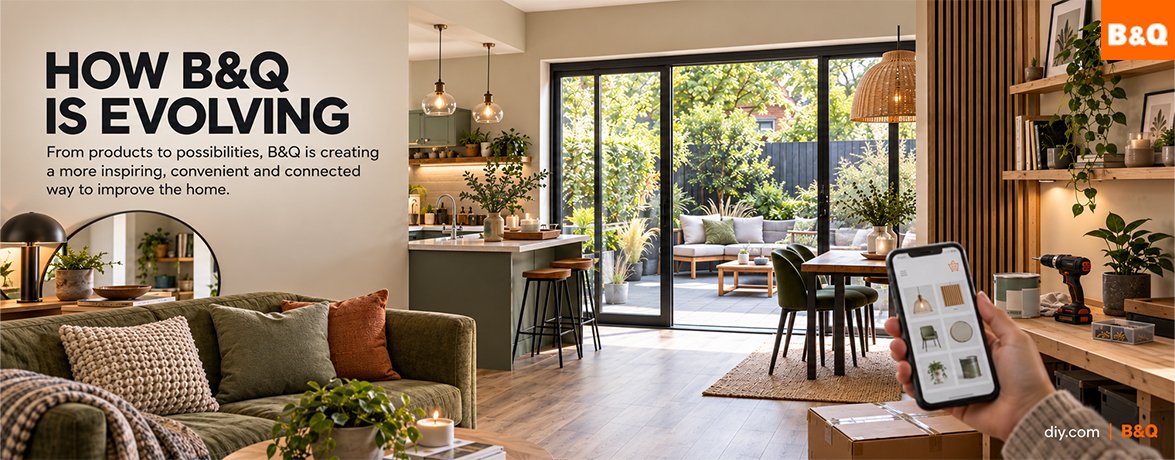
The Housing Improvement sector is transforming. Today's customers aren't just shopping for products. They need inspiration, convenience, direction and solutions that will help them to improve their homes. It has changed traditional retailers' approach to engaging the new consumer. One of the big names in the home improvement industry that has made the transition is B&Q.
B&Q has always been about adapting its products, services and customer experience to meet evolving consumer expectations, from its humble origins as a UK DIY retailer, through to its current omnichannel strategy.
The company was founded as a DIY retailer in the early 70s
B&Q opened its doors in Southampton in 1969 with Richard Block and David Quayle. What we are trying to do now is make home improvement products available to customers, which was the original concept. The company's product range and store locations grew over the years, and it became well known in the UK home improvement industry.
However, the definition of DIY has evolved. Today home improvement involves decorating, gardening, kitchens, bathrooms, storage solution, renovation and professional installation. Some customers might also need assistance with project planning, instead of buying single products. B&Q has grown with the emergence of this wider definition of home improvement.
Understanding the Modern Homeowner
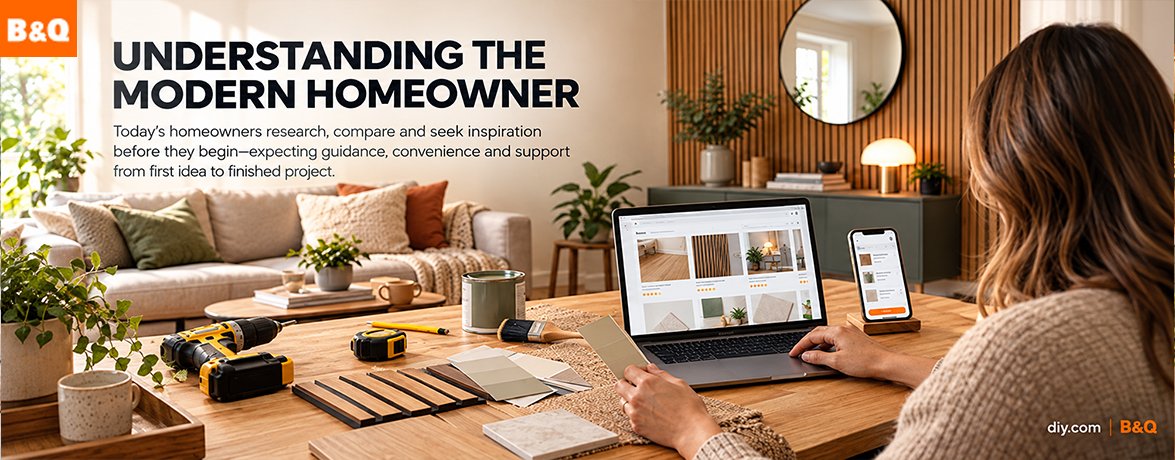
Homeowners have other expectations than those of their predecessors. Customers are active in research before purchasing a product. They shop around, read reviews, seek inspiration and will want to know exactly what a job entails before putting any money where their mouth is. It's altered the nature of the home improvement retailer.
The experience now has to entice the customer at the very first thought, through product selection, and finally until the project is finished. B&Q's approach is becoming more aligned with this approach as it is making products accessible with advice, services, and digital convenience.
An Omnichannel Approach
The relationship between offline and online experiences is one of the most significant developments in retail today. B&Q has created an omnichannel model in which customers can engage with the brand, both in-store and digitally. Customers can research products on-line, check availability, arrange delivery or use collection services before or after visiting a physical store. This is a sensible way to consider an important reality Customers don't consider channels. All they want is a hassle-free shopping experience.
A customer can start a project at home, go to a store for ideas, come back online to research the products, and select home delivery. Linking these experiences together together creates a more flexible customer journey.
Expanding Beyond Traditional DIY
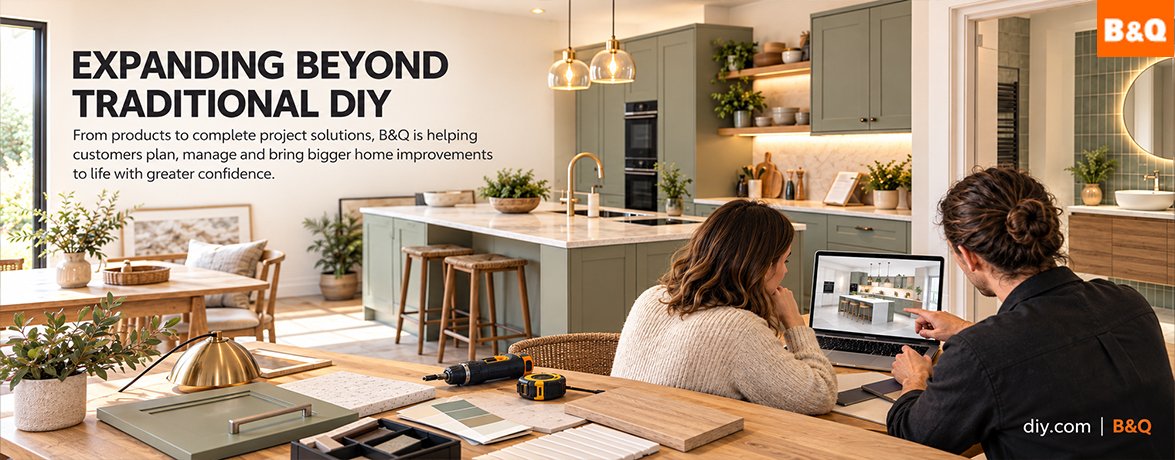
Beyond its range of DIY products, B&Q is also expanding its product range. It has sections of kitchens, bathrooms, decorating, gardening, tools, flooring, lighting and storage. The brand also provides services that can assist customers who have bigger projects, such as kitchen and bathroom planning and installation. This is a shift from selling individual products to providing more comprehensive home improvement services. This can help consumers better understand and manage complicated projects.
The Role of Own Brands
Another key element of its brand is the B&Q's own brand portfolio. There are brands like Good Home, Verve, Mac Allister and Magnusson, which span from kitchens to bathrooms, gardening to tools, etc. The added value of brands is that they enable retailers to develop and position brands which let retailers develop ranges around customer requirements. A well-defined product line can also ease the decision-making process for customers. When the amount of products is overwhelming, shoppers can browse series that cater to specific tasks or applications.
Increasing choice in retailing is done on the basis of market choice
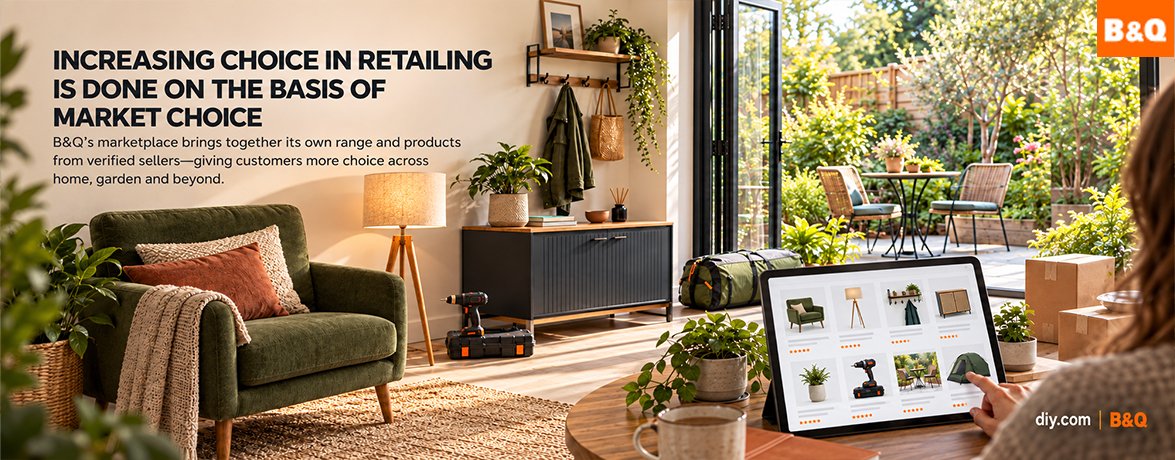
The retail industry is also shifting towards a marketplace-based structure. B&Q has just launched its marketplace concept to offer a wider choice of third party products for its customers, alongside B&Q's own range. With this strategy, the brand can have more products in the product lineup without having to depend solely on its traditional retail stock.
For the customers, the advantage is that they will have a wider choice. The marketplace can be one of the tools that can help the brand grow its digital presence and be more agile in adapting to consumer demand.
Sustainability in Home Improvement
Another consideration in today's modern consumers is sustainability. Consumers have been interested in items that can help make their homes more energy-efficient, and in ways to cut down on waste and to make more responsible purchasing choices. B&Q has made sustainability a part of its strategy in various areas of the business, such as responsible sourcing and sustainability initiatives on more sustainable products.
This is especially important for an home improvement company, as decisions made during renovations can have a lasting effect on the home's environmental footprint.
Brand experience is the reason
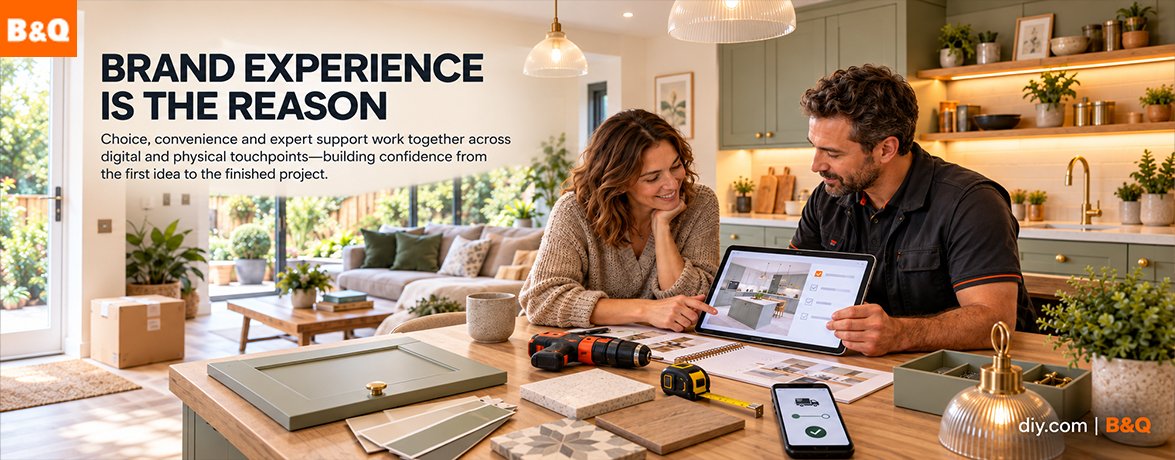
It's no longer just about products. Customers also recall how easy it was to locate what they were looking for, the clarity of information, convenience of delivery and whether they were supported when they needed it. This has led to the customer experience becoming a more significant element of retail branding.
B&Q's reinvention is a testament to how a traditional retailer can cultivate a more customer-centric relationship through a blend of:
- Product choice
- Digital convenience
- Physical stores
- Project inspiration
- Professional services
- Own-brand products
- Customer support
These components all work together to form a well-rounded home improvement.
What B&Q's Evolution Says About Retail
The shift in B&Q is a part of a larger change in retail. Brands are increasingly expected to go where consumers go online, in-store and the entire decision making process. They also demand that brands offer them more than products. They want solutions.
This is a battle for home improvement brands to get customers to understand what they need, find a product that fits their needs, and finish their project without excess complications.
The Road Ahead
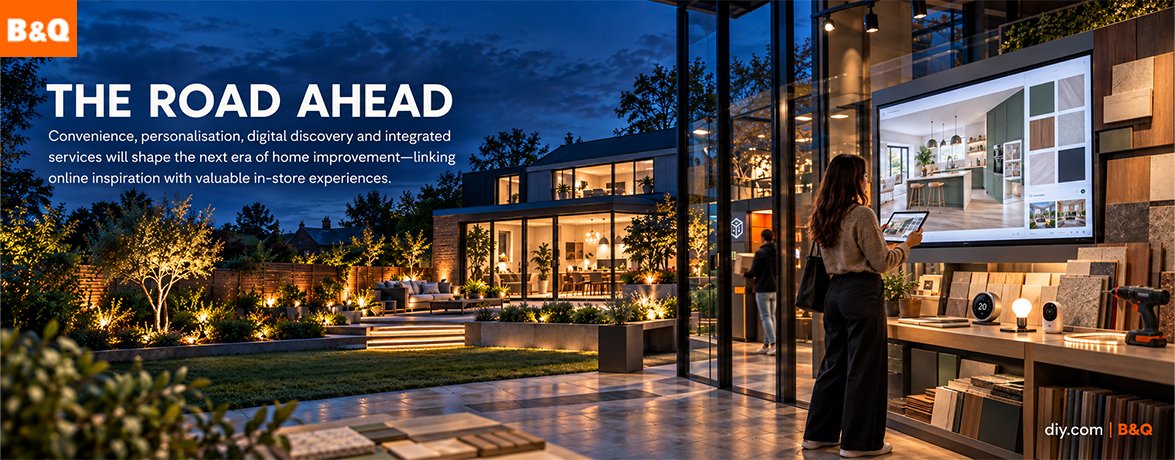
Convenience, personalization, digital discovery and integrated services will likely be the four main pillars that will define the future of home improvement retail. Technological advancement will shape the way consumers look for and buy products and physical stores will continue to play a role in products that are hard to replicate online experiences will be valuable. Brands that manage to link these experiences can build better relationships with their customers.
As B&Q continues to evolve, it embodies the ability of a respected retail brand to respond to evolving consumer expectations and to maintain its sense of purpose and mission: to make people's homes better.
Final Thoughts
B&Q's journey is not just that of a DIY business, it is dynamic and full of challenges. It's a case in point of the evolution of home improvement branding. Today's customers aren't just people who walk into a store and purchase a product. Discovery, inspiration, research, comparison, purchase and support.
B&Q is continuing to see how it can position itself as a wider home improvement brand, and how it can evolve its products, services and customer experience on this journey. With the retail landscape shifting so much, it is the brands that know the full customer journey who will be best equipped to stay relevant.